

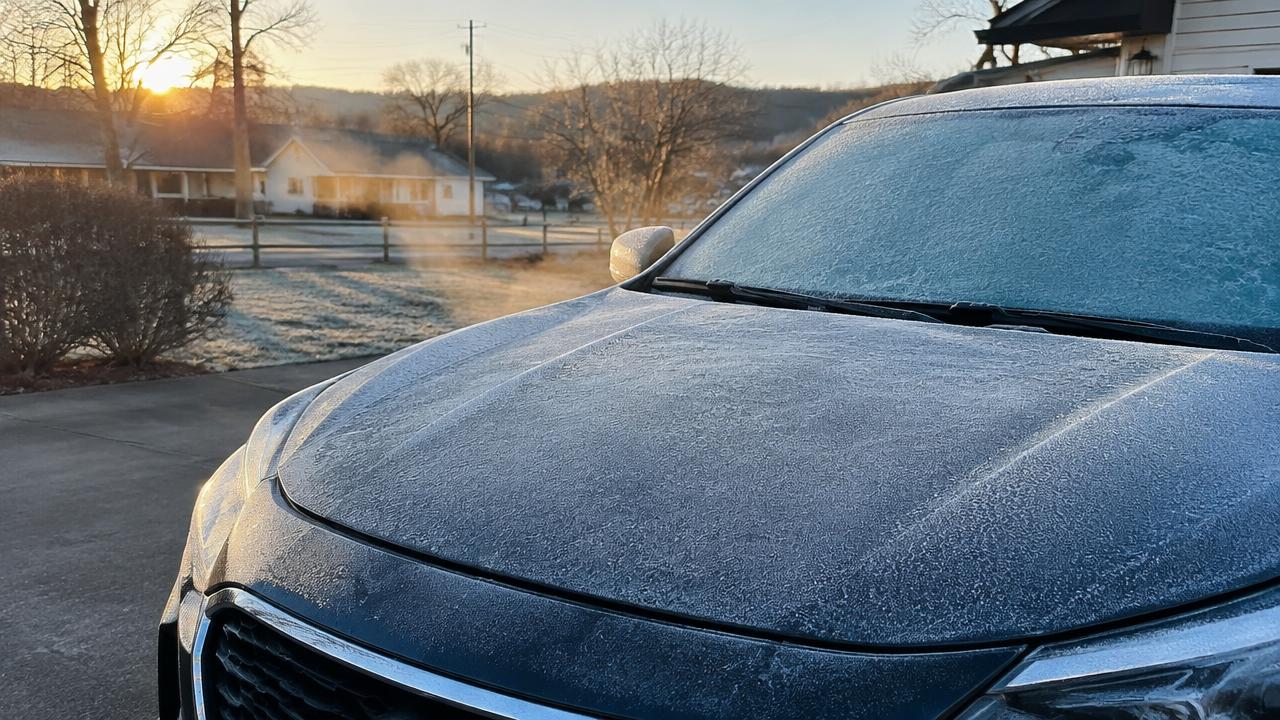
East Tennessee winters aren't brutal, but they don't need to be. The first frosty morning of the season, when the temperature dips into the 20s overnight in Maryville and the foothills, is reliably one of our busiest days. Cars that started fine all fall suddenly answer the key with a click.
Understanding why that happens can help you spot a weak battery before it strands you, and know what to do when it finally does.
What cold does to a car battery
A car battery makes power through a chemical reaction. Cold slows that reaction down, so the battery simply can't deliver as much current on a 25-degree morning as it can on a 70-degree afternoon. At the same time, cold engine oil is thicker, which means the starter has to work harder to turn the engine over.
So on a cold morning, you're asking for more power from a battery that can give less. A healthy battery handles it. A battery that's three to five years old, or that's been worn down by short trips and accessories, may not.
Warning signs your battery is fading
If you notice two or more of these, it's worth having the battery tested at a parts store before the next cold snap. Many will test it for free.
- The engine cranks slowly, especially first thing in the morning.
- Headlights look dim at idle and brighten when you rev the engine.
- Dash lights flicker or the radio resets when you start the car.
- You've needed a jump more than once in the past month.
- The battery case looks swollen, or there's white or green crust on the terminals.
- The battery is more than four or five years old.
Need help right now?
(866) 942-5991
Mon–Sat 8:30 AM–11 PM
How a jumpstart actually works
A jumpstart borrows power from an outside source to help your starter turn the engine over. Once the engine is running, your alternator takes over and begins recharging the battery.
Done correctly, it's safe for modern vehicles. The order of the connections matters, though, and so does where the final ground connection goes. Hooking cables up wrong can cause sparks, blown fuses or damage to sensitive electronics. That's one reason a lot of drivers would rather have someone come do it.
What to do after a jump
- Drive, don't idle. Plan on at least 20 to 30 minutes of real driving so the alternator can put charge back in.
- Turn off extras like heated seats and rear defrost for the first part of the drive if you can.
- Don't shut the engine off right away at your first stop.
- If the car won't start again the next morning, the battery likely needs replacing.
A safe check before you call
You do not need to diagnose the whole starting system. A few observations help Austin understand what he will find when he arrives. Stay out of traffic, keep the transmission in park, and do not smoke or create sparks near the battery.
- Look for headlights, dome lights or a trunk light that may have stayed on.
- Note whether you hear one click, rapid clicking, slow cranking or no sound at all.
- Check whether the dash lights come on, but do not repeatedly cycle the key.
- Look for a loose terminal clamp only if the battery is easy to see and reach; do not touch damaged or leaking parts.
- Tell Austin if the vehicle recently needed another jump or has been sitting unused.
What to expect when Austin arrives
Austin will first confirm where the vehicle is parked and how to reach the battery or jump terminals. In a Maryville apartment lot or a crowded shopping center, the building number and a nearby store entrance help him pull up beside the right car. If the vehicle is nose-in against a wall, mention that before he arrives so you can discuss access.
He will look at the battery connections and choose the proper connection points for the vehicle. Keep the keys available, turn off the radio, lights and climate controls, and remain clear of the engine compartment while he connects the power source. Once the engine starts, he will let it run and see whether it remains running before disconnecting everything.
A successful start does not tell you how much life the battery has left. It only means the engine is running now. Ask what Austin observed, then plan to have the battery and charging system tested, especially if this is the second no-start in a short period. If the car does not start, he will explain what happened rather than promising that another attempt will solve a different mechanical problem.
Cold-weather mistakes that make a no-start worse
- Cranking continuously until the starter gets hot and the battery has even less power.
- Connecting cables in a different order because a generic online diagram looked close enough.
- Using a damaged cable, a cracked battery or any power source that is not intended for a jumpstart.
- Leaving the lights and rear defroster on during the first drive after the jump.
- Driving straight to another short errand and shutting the car off before it has recharged.
- Assuming a new battery rules out a loose connection or charging-system problem.
Why short local trips matter
A week of quick drives between home, school and the store in Maryville may not replace the energy used each time the engine starts. Add cold temperatures, heated seats and a rear defroster, and the battery can gradually fall behind even though the car seems normal every afternoon.
When practical, combine errands into a longer drive instead of making several separate starts. If a vehicle at home in Louisville or on a rural property sits for extended periods, check its starting routine with the vehicle manufacturer or a qualified shop. Do not leave the engine running unattended just to charge it.
When a jump isn't enough
Sometimes a battery is simply finished. If it won't take a jump, or it dies again within a day, no number of jumps will fix it. We don't sell or replace batteries, so we'll tell you honestly when it's time to visit a parts store or shop. There's no sense paying for a second visit that won't hold.
Other times, a battery keeps dying because something else is draining it, like a trunk light, a phone charger, or a charging system problem. If you've replaced the battery and it still keeps dying, have the alternator and charging system checked.
Simple habits that help in winter
- Park in a garage on the coldest nights if you have one.
- Combine short errands into one longer drive so the battery fully recharges.
- Keep the terminals clean and tight.
- Replace an aging battery in the fall, before the first hard freeze.
Need help right now?
(866) 942-5991
Mon–Sat 8:30 AM–11 PM
Related
Learn more about our jumpstarts service, or see roadside help in Maryville and Louisville.