

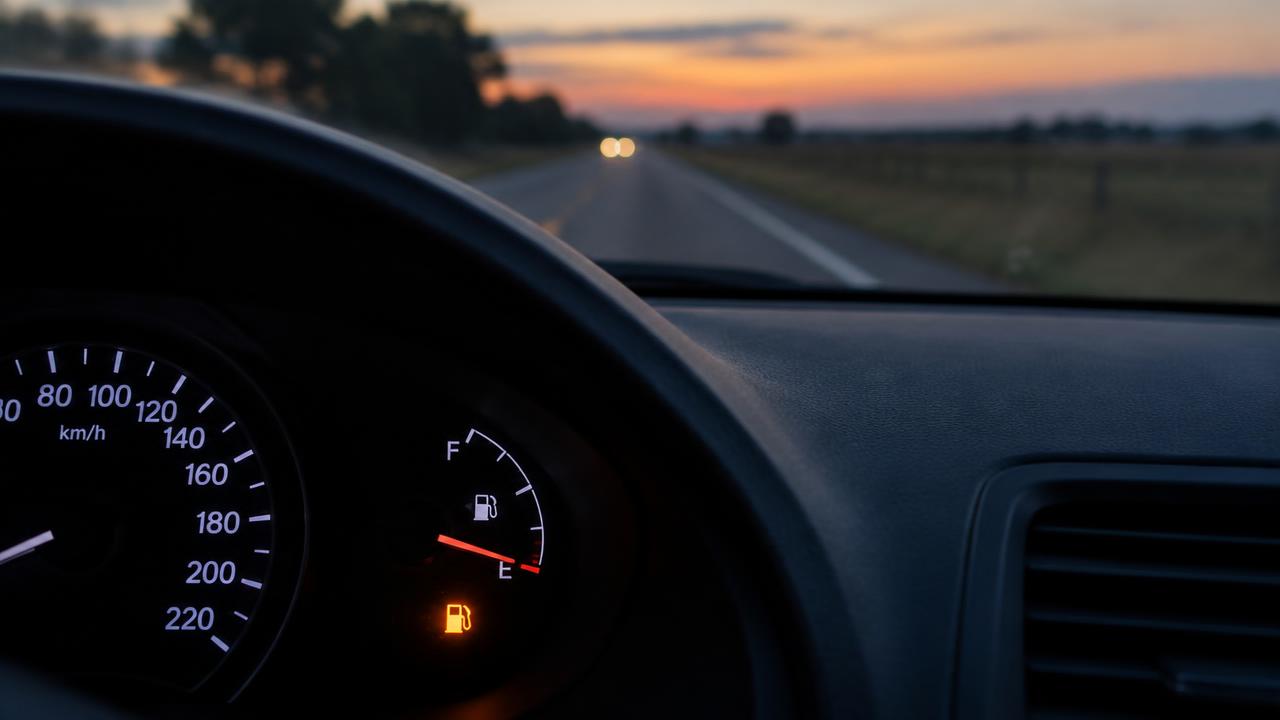
Running out of gas is one of those things nobody plans for and almost everyone does at least once. Around Blount County it usually happens in one of two places: on a back road between towns where stations are spread out, or in slow Parkway traffic in Pigeon Forge where you burn through the last of the tank inching along.
The first few minutes
- When the engine sputters, signal and coast toward the safest spot you can reach.
- Turn on your hazards.
- Don't keep cranking the engine; it won't help and it strains the fuel pump.
- Note your location: road, direction, and the nearest landmark.
How fuel delivery works
When you call, tell us your fuel type, where you are, and your vehicle. We bring enough fuel to get you safely to the nearest station, where you can fill up properly. Once the fuel is in, the engine may take a few extra cranks while fuel works its way back through the system. That's normal.
If your vehicle runs on diesel, call us to confirm diesel availability before Austin heads out.
Need help right now?
(866) 942-5991
Mon–Sat 8:30 AM–11 PM
Why not just walk to a station?
You can, but there are good reasons not to. Walking along a highway shoulder is risky, especially in the dark. Stations can be miles apart on rural roads. Many no longer sell gas cans. And leaving your car unattended on a shoulder isn't ideal either. Having fuel brought to you is usually faster and safer.
Is running out of gas bad for your car?
An occasional run-dry isn't a disaster, but it isn't great. Your fuel pump sits in the tank and uses fuel to stay cool. Running on empty can make it run hot, and doing it repeatedly can shorten its life. Running dry can also pull sediment from the bottom of the tank into the fuel filter.
Make sure the symptoms fit an empty tank
A stall does not always mean the car is out of fuel. Think about the gauge, the low-fuel warning light and how far you drove since the last fill-up. If the engine lost power with the gauge well above empty, or you smell fuel or see a leak, say that when you call instead of assuming delivery is the answer.
Look at the dash for other warnings without repeatedly restarting the car. A temperature warning, oil-pressure warning or unusual noise calls for a different conversation. Do not open a hot radiator cap or inspect a leak near moving traffic. Clear information helps avoid bringing fuel to a vehicle that needs another kind of service.
Choose a safe waiting place around Maryville
If you are on US-321, Lamar Alexander Parkway or US-411, a parking lot is safer than a narrow shoulder when the car can coast there under control. On a rural road near Greenback, use a straight, visible pull-off rather than a blind curve. Set the parking brake and keep your hazards on.
In Pigeon Forge traffic, the nearest numbered traffic light and business name give Austin a much better location than the Parkway alone. Outside town, provide the road name, direction and nearest crossroad. A dropped map pin may help when you can send it, but keep a spoken description ready in case the signal is weak.
Remain belted inside if traffic is close, or wait somewhere protected away from the roadway. Do not sit in a car stopped in a travel lane, and do not cross lanes to reach a gas station on the opposite side.
What to expect when Austin arrives
Austin will confirm the vehicle, its location and the fuel type before adding anything. Keep the fuel-door area accessible and stay clear of other traffic. If the fuel door uses an interior release, have the keys available. Tell him whether the car stalled on a slope, since that can affect how readily it picks up fuel after running dry.
He brings enough fuel to get you to a station, not a full tank. After adding it, follow his guidance for restarting. Turn off unnecessary electrical accessories and avoid one long, continuous crank. Short attempts with pauses are easier on the starter. If the engine does not respond, stop and discuss the symptoms rather than draining the battery.
Once the engine is running, let it settle before driving away. Go directly to the nearest suitable station and fill the tank there. If the car stalls again, the gauge still behaves strangely or you notice a fuel smell, do not assume another small amount of fuel will solve the problem; arrange for the vehicle to be checked.
Mistakes to avoid when the tank runs dry
- Holding the key or start button down for an extended crank after several unsuccessful attempts.
- Putting fuel into a vehicle without confirming whether it uses gasoline or diesel.
- Using an unapproved container or any container that is damaged or leaking.
- Walking beside fast traffic because a station appears nearby on a map.
- Leaving the vehicle without telling Austin where you went or how to reach you.
- Driving past the next station to run another errand on the small amount delivered.
Plan fuel stops for local routes
Before leaving Maryville for Townsend or Tellico Plains, start with more than a low warning light and a hopeful estimate. Rural stretches and mountain driving can change consumption, and a detour adds miles. On US-411 toward Greenback or Madisonville, choose a station before the tank is nearly empty instead of passing one because another may appear later.
The miles-to-empty number is an estimate based on recent driving, not a promise. Slow traffic, hills, heavy loads and idling can change it. If the needle drops unpredictably or the estimate changes dramatically over a short familiar trip, have the gauge and vehicle inspected.
A simple routine helps: look at the gauge before starting the engine, choose a likely refill point, and stop while you still have choices. If passengers are traveling with you, ask one of them to watch for a station rather than checking your phone behind the wheel. After any run-dry episode, reset your expectations for that vehicle's real driving range instead of relying on the distance you barely managed this time.
How to avoid running dry around Blount County
- Treat a quarter tank as empty, especially before heading toward Townsend, Tellico Plains or the Cherohala Skyway.
- Fill up before getting into Parkway traffic in Pigeon Forge or Gatlinburg.
- Don't trust the miles-to-empty display blindly; it changes with driving conditions.
- If your gauge has been acting up, get it checked.
Need help right now?
(866) 942-5991
Mon–Sat 8:30 AM–11 PM
Related
Learn more about our fuel delivery service, or see roadside help in Pigeon Forge and Greenback.