Alcoa Highway (US-129) and Pellissippi Parkway (I-140) carry a huge share of Blount County's traffic. They're fast, busy, and in places the shoulder isn't as wide as you'd like. That makes a flat tire on either road more than an inconvenience. Changing a tire a few feet from 60 mph traffic is genuinely dangerous.
Here's how to get off the road safely, what Tennessee law expects from passing drivers, and how we can put your spare on so you don't have to.
Recognize the flat early
A flat rarely announces itself with a bang. More often you'll feel the steering pull to one side, hear a rhythmic thumping, or feel the car wallow in turns. Many newer cars will also show a tire pressure warning light. The moment you notice any of these, start planning your exit.
Where to pull over
Driving a short distance slowly on a flat to reach a safer spot is usually worth it, even if it damages the tire. A tire is cheap compared to the risk of stopping in a bad place.
- Signal early and slow down gradually; don't slam the brakes.
- If an exit is close, take it. A gas station or parking lot is far safer than the shoulder.
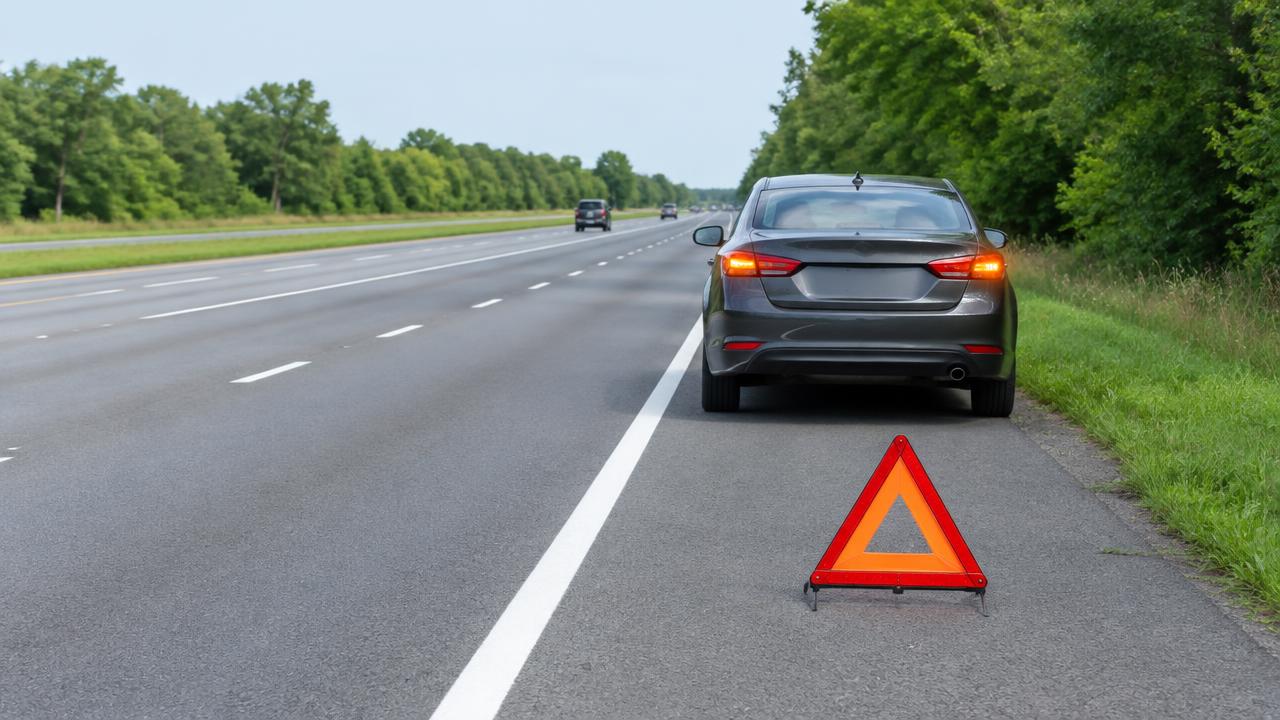
- If you must use the shoulder, pull as far right as you can, onto grass if it's firm and level.
- Avoid stopping on a curve, a bridge, or just past a hill.
- Turn on your hazards and set the parking brake.
Tennessee's Move Over law
Tennessee's Move Over law requires drivers approaching a stopped emergency vehicle, utility vehicle, or roadside assistance vehicle with flashing lights to move over a lane when it's safe, or slow down if they can't.
Hazard lights help passing drivers see you, so keep them on while you're stopped. If you have them, set out reflective triangles well behind your car.
Need help right now?
(866) 942-5991
Mon–Sat 8:30 AM–11 PM
While you wait
On a busy highway, the safest place to wait is often inside the car with your seatbelt on, especially if the shoulder is narrow. If there's a guardrail with room behind it, waiting there is another good choice. Never stand between your car and traffic.
Give us the road, your direction (toward Knoxville or toward Maryville on Alcoa Highway, for example), and the nearest exit or mile marker. That's the fastest way to pinpoint you.
How we install your spare
When we arrive, we position our vehicle to help protect the work area, then jack your car up at the correct lift point, remove the flat, install your spare, and tighten the lug nuts in a star pattern so the wheel seats evenly.
To be clear, we install your spare. We don't repair, plug or sell tires. Once the spare is on, you'll head to a tire shop for a patch or a replacement.
Find the spare and wheel-lock key without taking risks
Only search the cargo area when the car is parked somewhere safe. Do not kneel on the traffic side or empty bags onto a highway shoulder. If you are already in a store lot or driveway, take a moment to locate everything before calling.
- Look beneath the trunk or cargo-floor panel for a compact or full-size spare.
- On some SUVs and pickups, check whether the spare is mounted underneath or at the rear.
- Find the jack and lug wrench, but leave the vehicle on the ground.
- Look in the glove box or with the jack for the small adapter that fits a locking lug nut.
- Check the spare for obvious damage or very low pressure without removing it from its mount.
What to expect when Austin arrives
Tell Austin your direction, nearest exit and whether you are on the right shoulder, in a lot or on a ramp. On US-129, landmarks near Hunt Road and the airport exits are useful. On I-140, the nearest exit name or mile marker is better than simply saying Pellissippi Parkway. Stay in your chosen safe waiting place until he identifies himself.
He will look at the vehicle's position, the ground around the jack point and the condition of the spare. A level lot gives him a very different work area from a narrow or sloped shoulder. If something about the setup needs to change, he will talk that through with you before the wheel comes off.
Keep passengers away from the work area and do not stand beside him to watch the lug nuts. After the flat is removed and the spare is installed, he will tighten the lug nuts in the proper pattern. Put any cargo back only after the tools and flat tire are secured, and make sure nothing can roll into a pedal or strike a passenger.
Mistakes to avoid on US-129 and I-140
- Stopping in a live lane to protect a wheel instead of signaling and moving carefully to the safest reachable area.
- Opening a door into traffic because the shoulder feels too narrow for a normal exit.
- Placing a jack on soft soil, loose gravel or an uneven slope.
- Loosening lug nuts after the wheel is raised instead of before the tire leaves the ground.
- Using a compact spare without reading its speed and distance limits.
- Leaving the flat, tools or cargo loose in the passenger compartment.
Plan the drive to the tire shop
Once the spare is on, the goal is a controlled trip to a tire shop, not the rest of a long day of errands. Check the spare's sidewall and your owner's information for its exact limits. A compact spare can change braking and handling, so accelerate gently and leave more room than usual.
If you are near Alcoa, a nearby shop may mean avoiding another stretch of fast highway. If you are closer to Knoxville, choose a route appropriate for the spare rather than automatically returning to I-140. Call the shop before leaving to confirm it can inspect the damaged tire. Keep the flat with you unless the shop tells you otherwise; its puncture, sidewall and tread condition help determine the next step.
Driving on a donut spare
- Most compact spares are rated for about 50 mph; check the sticker on the wheel.
- They're meant for a limited distance, often around 50 to 70 miles.
- Handling and braking feel different, so leave extra following distance.
- Get your full-size tire fixed or replaced as soon as you can.
Need help right now?
(866) 942-5991
Mon–Sat 8:30 AM–11 PM
Related
Learn more about our tire changes service, or see roadside help in Alcoa and Knoxville.